
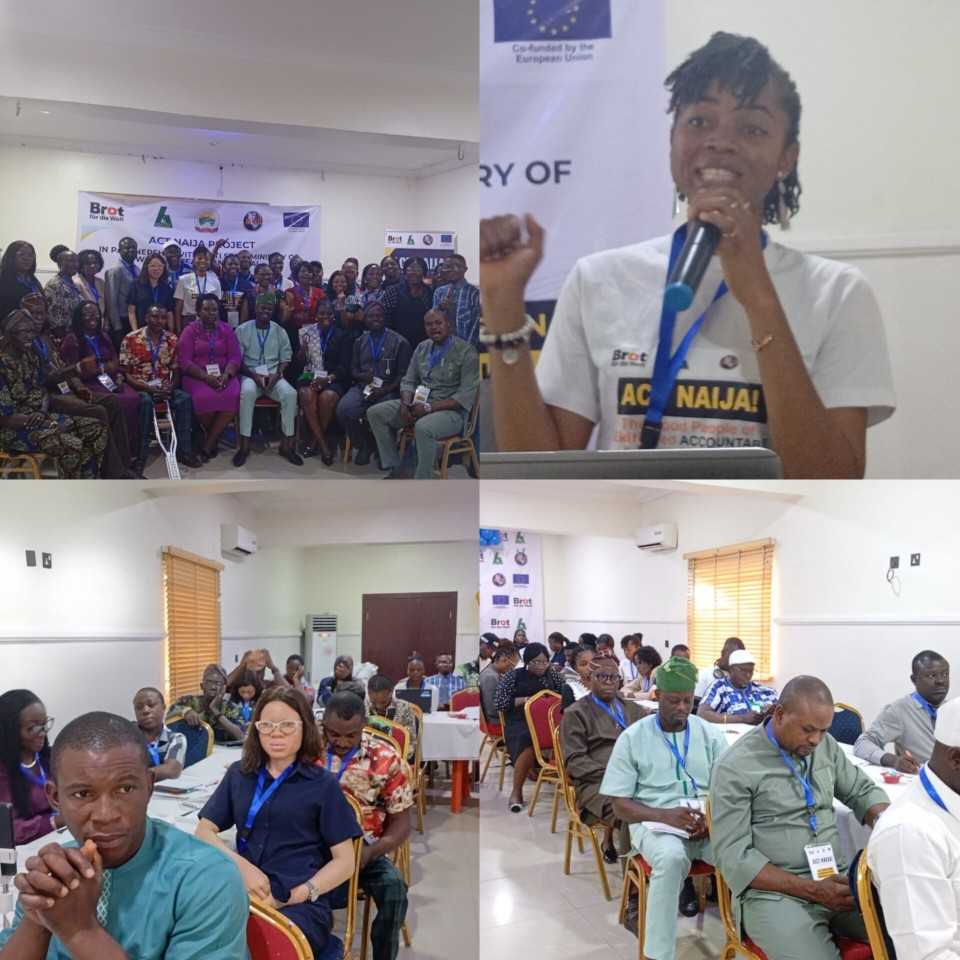
Relevant stakeholders in Ekiti State have been tasked to use their platforms and influence to ensure that vulnerable persons in the society have better access to various social protection schemes initiated by government and individuals.
This call forms one of the major resolutions at a one-day dialogue on strengthening social protection systems in Nigeria, with the theme “Ekiti State Dialogue on Social Protection: Civil Society Action to Strengthen Social Protection in Nigeria,”
The programme which was organized by the New Initiative For Social Development in partnership with the Ekiti State Ministry of Women Affairs and Social Development under the ACT NAIJA Project co-funded by the European Union and being Implemented by the consortium of three partners namely; New Initiative for Social Development (NISD, Africa Network for Environment and Economic Justice (ANEEJ), and Bread for the World (BfTW), Germany, attracted key stakeholders from government ministries, civil society organizations, the media, and community-based groups aimed at reducing poverty, vulnerability, and social exclusion while promoting citizens’ access to basic services and livelihood support.
Speaking during the event, the NISD Programme Officer in Ekiti State, Ms. Rachel Olori, highlighted the need for increased public awareness of existing social protection schemes in the state so as to make life worth living for the downtrodden.
“Social protection programmes are being implemented across the country, but many Nigerians are unaware of them or do not know how to access them,” she said. “Using Ekiti as an example, most people do not even know such programmes exist, or how they can benefit from them. Our goal under this project is to strengthen the framework for implementation and improve public understanding of how social protection works in the state and across other implementing states.”
Olori added that NISD, in collaboration with the Ministry of Women Affairs and Social Development, plans to intensify awareness campaigns and stakeholder engagements.
“We intend to work closely with our partners and stakeholders to promote social protection awareness and push the agenda forward across Ekiti State,” she said.
In his remarks, the Project Manager, Mr. Segun Ojo, described social protection as a cornerstone for reducing poverty and safeguarding the rights of vulnerable citizens. He emphasized the importance of collaboration between government and civil society organizations in bridging the gap between policy and implementation.
“Civil society plays a vital role in ensuring that interventions reach those who truly need them,” he noted.
Discussions during the dialogue focused on improving coordination among key agencies, including the Ministry of Women Affairs and Social Development, the Social Protection Steering Committee (SOCU), and the Social Investment Coordinating Agency.
Participants explored reforms aimed at enhancing accountability, inclusiveness, and the use of digital innovations to improve programme delivery. They also deliberated on expanding coverage of initiatives such as the Ekiti State Health Insurance Scheme for the Poor and Vulnerable and youth empowerment programmes.
Among those present were Mrs. Olukemi Akinleye, representing the Ekiti State Ministry of Women Affairs and Social Development; Mr. Abiodun Ariyo, of the State Social Protection Steering Committee (SOCU); and Mr. Ogundele O.S., from the Ekiti State Social Investment Coordinating Agency, among others.
Speaking to journalists, Mr. Ogundele commended the state government’s efforts toward implementing social protection policies.
“The establishment of the Social Investment Coordinating Agency reflects the government’s commitment to tackling poverty and social challenges,” he said. “In Ekiti, more than six million people have benefited from programmes such as N-Power, GEEP, and the Conditional Cash Transfer Scheme. Those who are not yet aware are often people living in rural areas or those without adequate access to information, or who aren’t conscious of their environment.”
Through continuous advocacy and capacity-building, NISD has remained a leading voice in promoting inclusive development and citizen participation in Ekiti State. The organization reaffirmed its commitment to supporting the state government and development partners in building a robust, transparent, and sustainable social protection system that leaves no one behind.
