
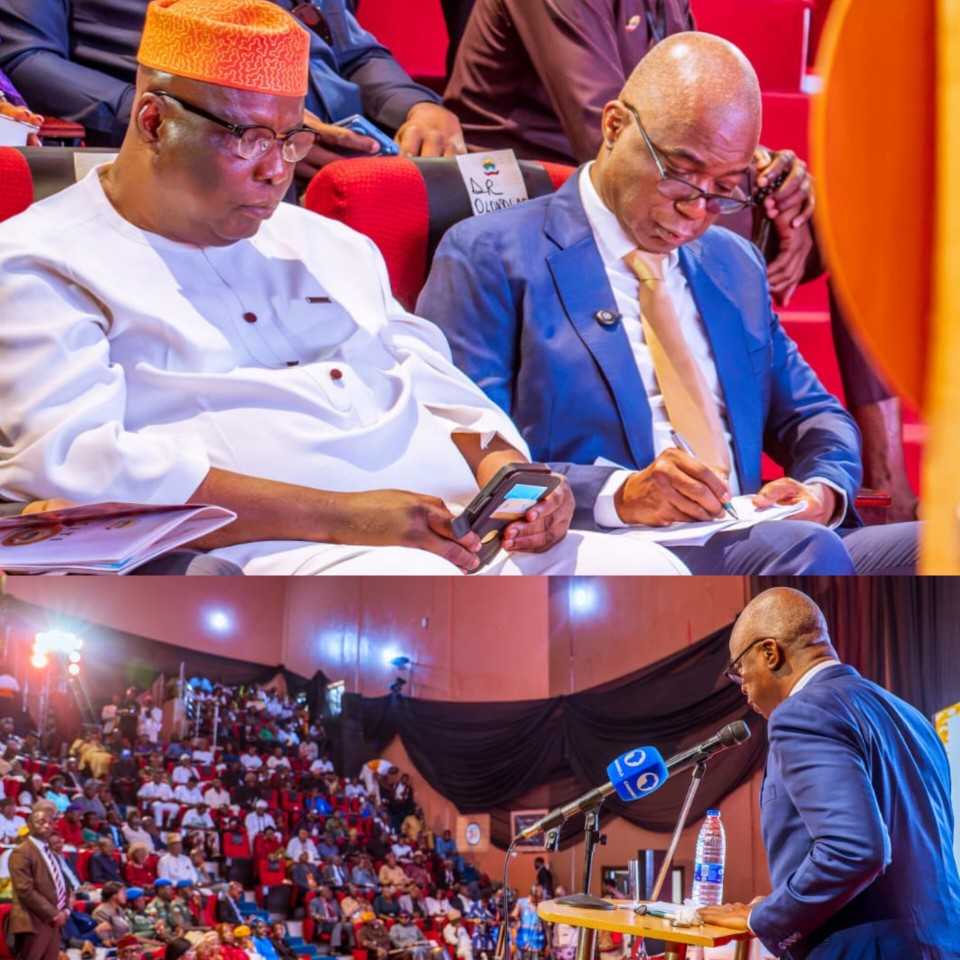
The Chancellor of Ekiti State University (EKSU), Dr. Tunji Olowolafe, has advocated increased investment in artificial intelligence (AI), renewable energy and emerging technologies to accelerate economic growth, create employment and transform Ekiti State’s development prospects.
Olowolafe, who delivered the lead paper at the Ekiti at 30 Future Summit, proposed the development of renewable-energy-powered microgrids across the state’s 177 wards, alongside greater investment in technology-driven enterprises, as part of measures to stimulate productivity and sustainable wealth creation.
He said reliable electricity was essential to the growth of education, healthcare, small businesses and industrial activities, adding that renewable energy could provide the power needed to unlock economic opportunities across communities.
The summit also featured a keynote address by Governor Biodun Oyebanji, who called for a shift from prolonged analysis of Ekiti’s potential to practical efforts capable of translating its opportunities into tangible prosperity.
Olowolafe, in his paper titled “The Path to Ekiti’s Greatness: Opportunities, Choices, and Imperatives for the Next 30 Years,” identified artificial intelligence, robotics, biotechnology, automation and new energy systems as critical areas that would shape the global economy and determine the competitiveness of states in the coming decades.
AI, RENEWABLE ENERGY AND THE EKITI KNOWLEDGE ZONE
The Are-Ekiti-born entrepreneur identified the Ekiti Knowledge Zone as a strategic investment capable of connecting young people and technology-based businesses in the state to international markets.
He said the project, conceived under former Governor Kayode Fayemi and being implemented by Governor Oyebanji, would provide an enabling environment for young people to establish technology ventures in Ekiti while serving clients across Nigeria and other parts of the world.
“On the digital side, the Ekiti Knowledge Zone is now under way. Conceived under former Governor Kayode Fayemi and being implemented by His Excellency, Governor Biodun Oyebanji, once complete, it will give our young people a place to build technology ventures without leaving Ekiti, serving clients in Lagos, London and Singapore, and bringing that income home to Ekiti. That is how education becomes wealth,” he stated.
The Pro-Chancellor of Miva Open University stressed that the state’s educational advantage must be matched with investments in emerging technologies and the infrastructure required to support innovation and enterprise.
He identified artificial intelligence, robotics, biotechnology and automation as areas offering opportunities for Ekiti to strengthen its economic base, create new jobs and improve its participation in the global digital economy.
Olowolafe also proposed collaboration with the Rural Electrification Agency (REA) to develop renewable-energy-powered microgrids across the state’s 177 wards.
According to him, the proposed infrastructure would provide reliable electricity for schools, healthcare facilities, workshops and small businesses, thereby improving service delivery and stimulating economic activities at the grassroots.
He further challenged scientists and skilled artisans to develop solar-powered cocoa-drying equipment to modernise cocoa processing, improve productivity and strengthen the state’s capacity to generate wealth and earn foreign exchange.
TECHNICAL EDUCATION AND DIGITAL SKILLS DEVELOPMENT
Olowolafe said the adoption of new technologies must be supported by a skilled workforce capable of meeting the changing demands of the economy.
He commended the Ekiti State Government for establishing six technical colleges across the state but called for their expansion, modernisation and improved funding to equip more young people with practical and industry-relevant skills.
He identified solar installation, welding, fabrication, machinery repair and food processing as technical trades that could provide sustainable livelihoods and support industrial development.
The industrialist advocated curriculum modernisation, improved equipment and infrastructure, as well as the recruitment of experienced vocational instructors from countries with advanced technical education systems.
“We must expand this capacity by modernising the curriculum and directly hiring master vocational instructors from nations with elite technical education systems, such as Switzerland, Germany, Canada and South Africa, to train our faculty and connect our colleges digitally to clients and employers everywhere,” he said.
The EKSU Chancellor also pledged to partner with the state government to establish upgraded, modern and solar-powered ICT centres in the six government technical colleges, while supporting the introduction of foreign expertise into vocational training.
He further proposed partnerships with international mining schools to develop EKSU’s Geology Department into a world-class institution within five years.
CONTINUITY, INFRASTRUCTURE AND WEALTH CREATION
The Chancellor identified the Ekiti Agro-Allied International Cargo Airport as an example of the benefits of continuity in governance, noting that complementary infrastructure, particularly good road networks, would be necessary to maximise its economic potential.
He also highlighted the importance of partnerships between government, communities and private-sector stakeholders in identifying and addressing development needs.
Citing the Gbemisola Olowolafe Memorial Community Secondary School in Are-Ekiti, he said effective stakeholder engagement could support the development of institutions capable of preparing young people for future economic opportunities.
He expressed the ambition to develop the school into a world-class institution with a capacity for 600 students and a curriculum spanning science, technology, languages, arts and sports.
The Chairman of the Tunji Olowolafe Foundation added that the GOMTECH ICT centre, located adjacent to the school, was already training young people in artificial intelligence, coding, graphic design and Mandarin.
He also highlighted his digital transformation initiatives at EKSU since his appointment as Chancellor in 2024, including Project Digi-Teach EKSU, designed to equip all 650 lecturers with digital teaching competencies.
“The same thinking drives our work at Ekiti State University, where His Excellency appointed me Chancellor in 2024. Through Project Digi-Teach EKSU, we are bringing all 650 lecturers to full digital teaching proficiency, and our Trading Room has grown into a Senate-approved diploma programme in financial markets,” he explained.
Olowolafe added that high-speed Starlink internet had been installed at 12 locations across the university campus.
Earlier, Governor Oyebanji urged Ekiti to embrace innovation, productivity and technology as it plans its next phase of development, describing the Ekiti Knowledge Zone as a major initiative capable of expanding the state’s access to global knowledge, technology and business opportunities.
