
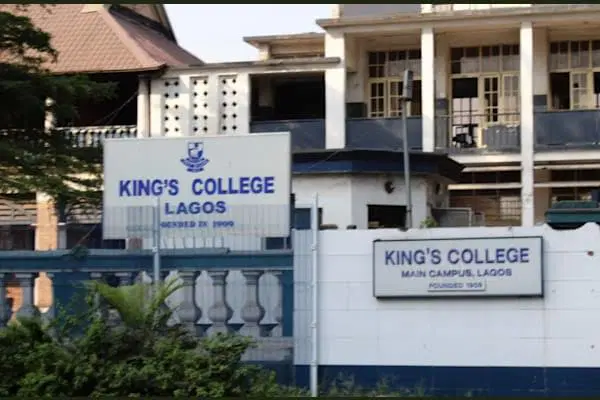
The controversy over the concession of King’s College, Lagos, to the King’s College Old Boys’ Association, KCOBA, by the Federal Government may be far from over, as parents and other stakeholders are mobilising for a mass protest against the move.
Speaking with Vanguard’s correspondent, the Chairman of the Parent-Teacher Association, PTA, Mr Peter Oluwaseye, said the protest had become necessary because of the opposition to the concession by virtually all stakeholders. He explained that parents were not in support of the move, noting that senior civil servants and the wider community also opposed it. He argued that old boys should not view the college as their property, since they had merely attended the school just like the current students, stressing that King’s College remained a public institution.
He said the old students should give to the college willingly rather than seeking to take it over, insisting that no private entity could assemble the calibre of teachers currently at the college. He declared opposition to the concession in whatever form it was being planned.
Recall that the President of KCOBA, Alhaji Kashim Ibrahim-Imam, early last month publicly announced the concession of the college to the association. The old boys also launched a N100 billion endowment fund to reposition the 116-year-old institution.
Among the first donors to the fund were the First Lady of Nigeria, Mrs Oluremi Tinubu, who donated N10 million, and Ibrahim-Imam, who donated N1 billion. The former Board of Trustees (BoT) Chairman, Chief Philip Asiodu, and the association’s new Board Chairman, Alhaji Femi Okunnu, also donated N100 million each.
The concession is intended to finance infrastructure renewal, teacher development, digital technology, scholarships, innovation, research and students’ welfare.
Ibrahim-Imam described the development as a defining moment in the history of the college and a potential blueprint for the renewal of public education in Nigeria. He noted that the arrangement would enable the old students’ association to partner with the government in upgrading the school’s infrastructure, strengthening governance and improving learning outcomes without altering its ownership.
He allayed fears that the government had sold the college to the association, explaining that it was not a privatisation agreement but rather the establishment of a new governance framework through which KCOBA would partner with government to restore, strengthen, modernise, and sustain the institution. He described the moment as truly defining, not just in the history of King’s College Lagos but in the continuing evolution of public education in Nigeria, saying the approval represented one of the most consequential developments since the college’s establishment in 1909.
He reflected on the college’s 116-year legacy as one of the most respected symbols of educational excellence on the continent, noting that it had nurtured generations of Nigerians who had distinguished themselves across public service, diplomacy, business, academia, medicine, engineering, the military, the judiciary and technology. He said graduates of the institution had shaped governments, built industries, transformed communities, defended democracy and served humanity, even as he acknowledged concern over the gradual deterioration of many of the facilities, systems, and structures that once made King’s College the standard bearer of secondary education in Nigeria.
Giving insight into how the journey toward the concession approval began, Ibrahim-Imam explained that the milestone had not happened overnight, describing it as the culmination of years of careful planning, sustained advocacy, constructive engagement, and unwavering commitment by generations of Kingsmen who refused to accept that decline should define the future of their alma mater.
