
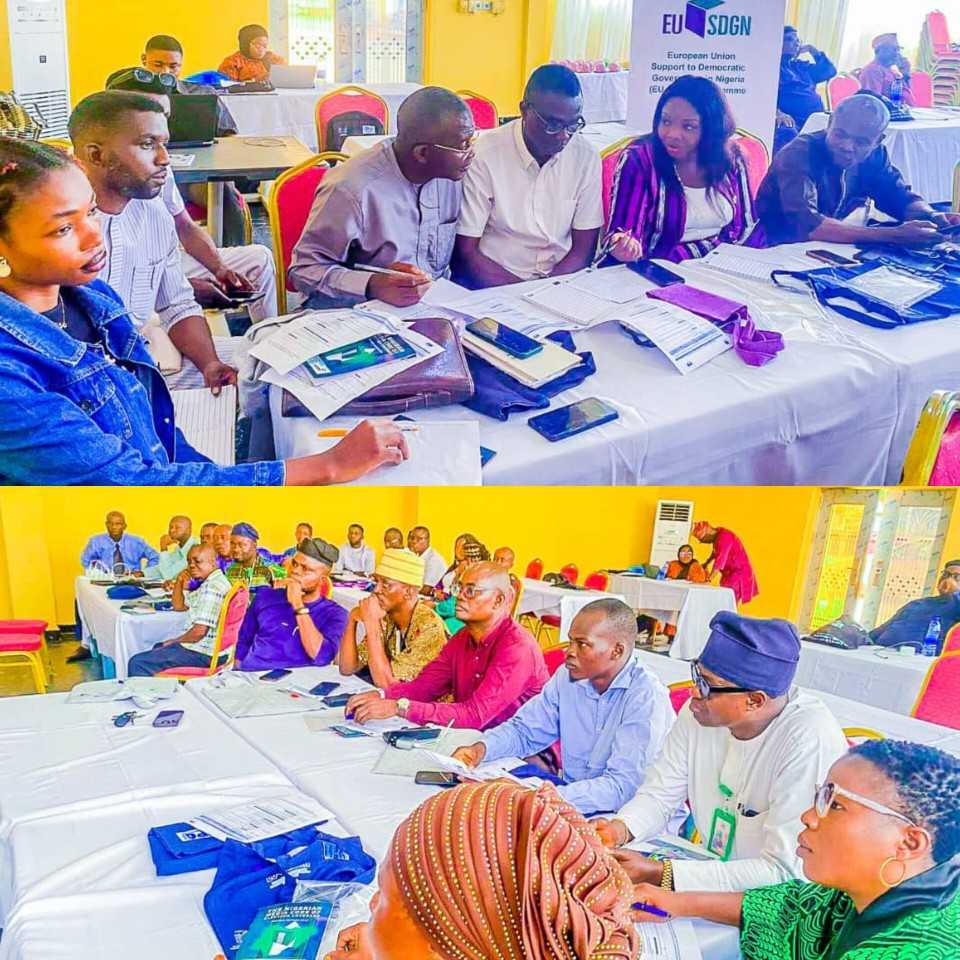
The International Press Centre (IPC) has engaged journalists in Ekiti State in a two-day stakeholders’ dialogue on credible elections, as part of activities to train media practitioners ahead of the forthcoming June 20 governorship poll in the state.
Speaking at the opening ceremony of the workshop, IPC Executive Director, Lanre Arogundade, explained that the dialogue, funded by the European Union, was organised under the programme titled: “EU-Support to Democratic Governance in Nigeria (EU-SDGN II), Component 4: Support to Media.”
He noted that the initiative is aimed at strengthening the capacity of the media to promote credible elections through factual, accurate and fair reporting. Arogundade said the programme is part of a broader five-year intervention designed to support democratic governance and improve the role of the media in Nigeria’s electoral process.
He added that fact-checking and inclusive reporting are critical responsibilities for journalists, particularly during election periods, noting that the media must play a central role in ensuring transparency and accountability in the democratic process.
Speaking with journalists, a resource person and Director of Journalism Clinic, Taiwo Obe, urged journalists to retool themselves and embrace artificial intelligence in order to remain effective in the evolving media landscape shaped by changing patterns of news consumption. He said the digital transformation of the media industry requires journalists to continuously upgrade their skills, including the use of digital apps, tools, and AI.
Also speaking, a Professor of Mass Communication at the Federal University Oye-Ekiti (FUOYE), Adebola Aderibigbe, urged journalists in the state to ensure that coverage of the forthcoming governorship election is driven by issues rather than personalities. He stressed that sensationalism should not dominate discussions around the 2026 election, and that accuracy, fairness, balance, and fact-checking are critical. “Do not hear from Party A without hearing from Party B; otherwise the report will be skewed to one side. And once issues of elections are skewed, problems will naturally arise,” he added.
