
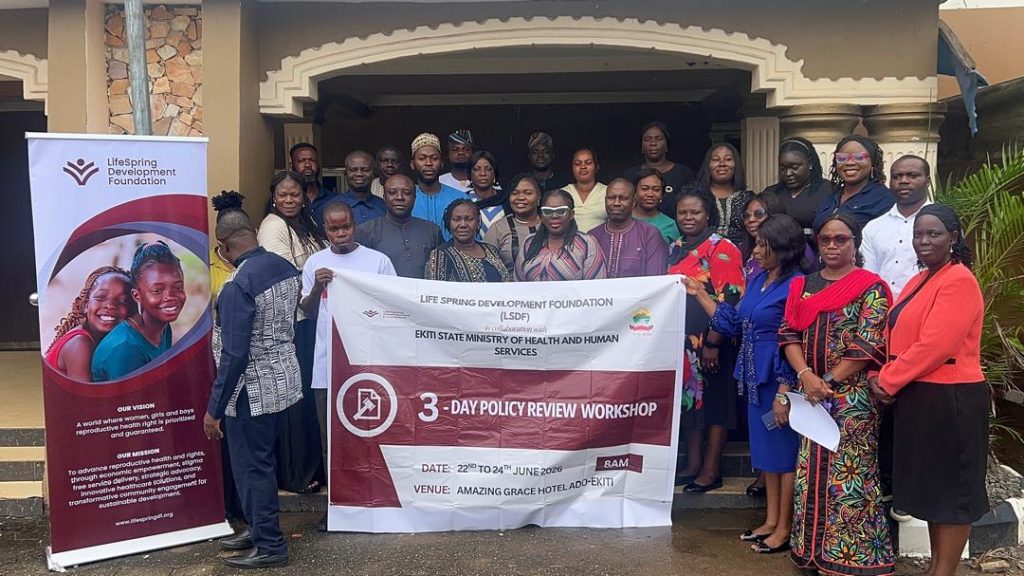
Stakeholders in Ekiti State have called for strong political will and sincerity of purpose in implementing the Violence Against Persons Prohibition, VAPP, Act and the Safe Termination of Pregnancy, SToP, guidelines as critical measures to end Gender Based Violence, GBV, in the state.
This was one of the resolutions reached during a three-day State Level Workshop on VAPP/SToP Policy Domestication held in Ado Ekiti and organized by Life Spring Development Foundation.
The workshop brought together legal practitioners, health officials, religious leaders, security agents, and media practitioners who brainstormed and shared experiences on VAPP/SToP guidelines, with special focus on challenges, success stories and prospects of the policies.
Speakers at the opening ceremony, including the Chairman of the Christian Association of Nigeria, CAN, Ekiti State, Reverend Emmanuel Aribasoye; Chief Imam of Ogotun, Imam Rasaq Oluyede; and Executive Secretary of the Primary Health Care Development Agency, Dr. Akintunde Ogunsakin, said government was working hard to curb GBV but much more would be achieved if VAPP/SToP policies were properly enforced.
They noted that myths, stigma, and sentiments surrounding the SToP guidelines had hindered access to safe reproductive health services for survivors of sexual violence.
In his opening remarks, the representative of the Country Director, Life Spring Development Foundation, Dr. Ojukwu Mark Ojukwu, said the fight against GBV would be defeated if stakeholders continued to attach sentiments and myths to the SToP guidelines.
According to him, the training aimed to brainstorm on the “rosebuds, challenges, and obstacles” in implementing the SToP policy for necessary corrections and stronger stakeholder buy-in.
Declaring the programme open, the Commissioner for Health, Dr. Oyebanji Filani, who was represented by the Permanent Secretary, Ministry of Health, Mrs. Olusola Igodan, commended the organizers for the initiative, describing it as thoughtful and timely.
While agreeing on the importance of the SToP guidelines, Dr. Filani advocated the need for people to embrace family planning as a preventive method to unwanted pregnancy and reduce cases of unsafe abortion.
Participants observed that although Ekiti State had domesticated the VAPP Act, weak enforcement, poor funding, and lack of awareness among rural communities remained major obstacles to justice for survivors.
They recommended capacity building for police, health workers, and community leaders, as well as dedicated budget lines for GBV response centers across the 16 LGAs.
Stakeholders resolved that ending GBV would require a multi-sectoral approach involving government, religious institutions, civil society, and the media to change harmful norms and ensure survivors get medical, legal, and psychosocial support without delay.
