
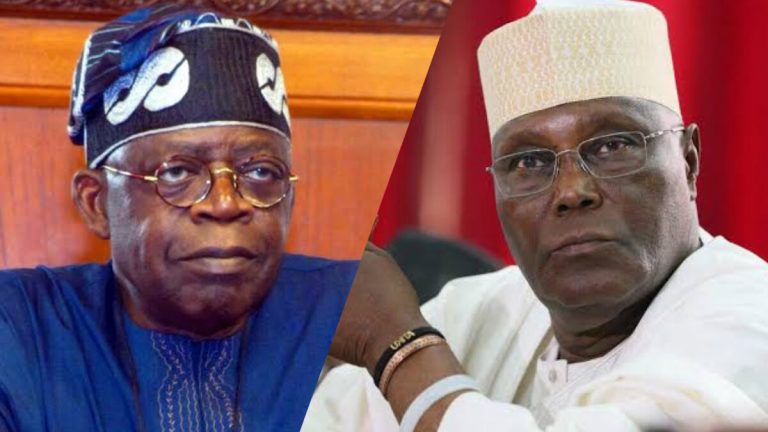
……as Atiku disagrees, tells Tinubu to step aside
Osamagbe Imadiyi
On Sunday, the Presidency rejected any idea that new information would surface from a court order in the United States ordering the Drug Enforcement Administration and the Federal Bureau of Investigation to make files related to President Bola Tinubu’s previous investigation public.
It maintained that the records, which go back to a Chicago drug trafficking investigation in the early 1990s, have been accessible to the public for more than thirty years and that the President has no new concerns about them.
Following a decision by U.S. District Court Judge Beryl Howell in Washington, DC, both agencies were directed to search and process non-exempt documents in response to Freedom of Information Act requests submitted by Aaron Greenspan, an American legal researcher.
The FBI and DEA must abide by Greenspan’s FOIA requests regarding a Chicago-based drug ring from the early 1990s—”involving Tinubu and three others: Lee Andrew Edwards, Mueez Akande, and Abiodun Agbele,” according to a copy of the court ruling that was obtained on Sunday.
Mr. Bayo Onanuga, the President’s Special Adviser on Information and Strategy, responded to the development by saying, “There is nothing new to reveal.” Over 30 years have passed since the FBI and DEA’s Agent Moss report was made public. The reports did not indict the Nigerian leader.”
Onanuga acknowledged that government attorneys were examining the US judge’s decision, claiming that the records do not provide any new insight into Tinubu’s past.Judge Howell’s April 8 order requires the FBI and DEA to search and process any non-exempt documents in response to Freedom of Information Act requests made by Aaron Greenspan, an American legal researcher.
Between 2022 and 2023, Greenspan, the operator of the transparency platform PlainSite, filed 12 FOIA requests. His filings included requests for documents pertaining to Tinubu and three other people: Lee Andrew Edwards, Mueez Akande, and Abiodun Agbele. They also sought information on a drug trafficking operation that was based in Chicago in the early 1990s.
In their “Glomar responses,” the FBI and DEA had up until now refused to confirm or deny the records’ existence. But the court decided that in this instance, such responses were not warranted. Judge Howell emphasized in her ruling that the public interest in the case outweighed any possible privacy concerns. The agencies did not adequately justify their decision to withhold the information, according to the ruling.
Former Vice President Atiku Abubakar, who challenged Tinubu in the 2023 presidential election, has praised the ruling of the U.S. court. He contended that Tinubu “should step aside” for the benefit of Nigeria’s reputation abroad if the revealed documents show the President is unfit to serve.
In a statement issued through his media assistant, Paul Ibe, Atiku stated that “anyone occupying the Presidency must not be of tainted character.” He went on to say that the entire scandal highlighted the necessity of “full disclosure” regarding issues like academic credentials and purported forfeitures.
“The explanation is straightforward: the Federal Republic of Nigeria’s president cannot be a person with a corrupt background.The state is required to guarantee complete transparency. It is crucial that Nigerians are aware of the leader’s history, educational background, age, state of origin, and schools attended.”
