
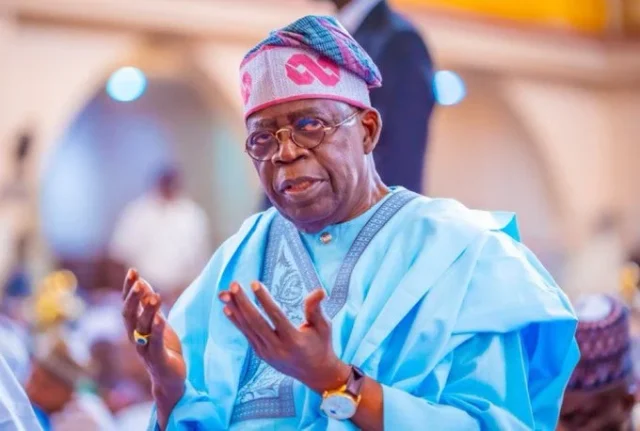
President Bola Tinubu told a delegation of Oyo State traditional rulers in Abuja on Thursday that his administration refused to negotiate with or pay ransom to the militants behind last May’s kidnapping of schoolchildren and teachers in Oriire.
He explained that the kidnappers had demanded money as well as the release of jailed members of their gang, and that both demands were turned down outright. He described the military-led operation that eventually freed the victims after 56 days as one driven by intelligence work rather than concessions to the attackers.
Tinubu linked his recent directive to expand the Army from eight to twelve divisions directly to the Oriire crisis, saying the move was meant to cut down response times and give security forces the manpower and geographic coverage needed to tackle terrorism and banditry more effectively. He also revealed plans to retrain and re-equip forest guards for frontline security duties, and renewed his push for the creation of state police forces with built-in safeguards against misuse.
Speaking after meeting with the Olubadan of Ibadanland, Oba Rashidi Ladoja, and other Oyo traditional rulers, the President encouraged communities to build up local intelligence gathering, praised the military for its role in the rescue, and asked state governments to channel more of their federal allocations into road construction to help security agencies reach remote areas. The Oriire attack, which occurred on May 15, 2026, left roughly 39 pupils and seven teachers abducted and claimed the life of a teacher, Michael Oyedokun. The operation that freed the hostages wrapped up on July 10, resulting in eight arrests and the elimination of several suspects, according to the Presidency.
This marked one of the President’s first public comments on the incident since the July 10 rescue. He explained that the kidnappers had tried to secure the release of gang members already in custody as one of their conditions, on top of the ransom demand, and that his government rejected the deal entirely, adding that the perpetrators would face consequences regardless of where they or their communities came from.
He credited the successful outcome to public support and prayers, and commended the armed forces for their performance, saying he would pass that commendation on to them directly.
Tinubu said the rescue succeeded largely because the military had detailed knowledge of the forest terrain where the hostages were held. He said the episode offered the government fresh lessons and forced a rethink of its security strategy, mapping and operational approach, with the army’s expansion from eight to twelve divisions forming a direct response to those lessons.
He explained that every security incident forces the government to reassess its strategy and structure, and pointed to the shift from eight to twelve army divisions as evidence of a response built around both geography and numbers. A response, he said, made possible without paying ransom, because the military understood the forest terrain involved.
He added that shortening response times in this way would give security forces the strength needed to defeat terrorism and banditry.
He went on to say that alongside this, government is finally addressing gaps that have persisted for decades around local-level security, including plans to introduce state police with protections against abuse.
The President attributed the rise in kidnappings and terrorist violence partly to instability in neighbouring Sahel countries. He noted that some of the attackers are not Nigerian nationals, and argued that the security breakdown in Mali, Burkina Faso and Niger Republic has worsened Nigeria’s own security challenges which he said makes strengthening forest guards and establishing state police even more urgent.
He said forest guards would be retrained and re-equipped to take on frontline security roles rather than being restricted to wildlife protection duties, noting that they would now be positioned to pursue criminals operating within forested areas rather than only monitoring wildlife.
Tinubu appealed to the traditional rulers to relay his message to their communities, urging citizens to stay alert, familiarise themselves with their neighbourhoods, and report unfamiliar individuals as part of a broader intelligence network.
He argued that the scale of resources now available to states far exceeds what was previously possible, noting that states are no longer borrowing to pay salaries and that pensioners are being paid as due. He urged governors to prioritise building roads and access networks over less impactful spending, in order to genuinely improve living standards and help security agencies reach underserved areas.
The President committed to holding further consultations with traditional rulers nationwide and asked the Oyo delegation to convey his appreciation to the armed forces operating within their communities.
