
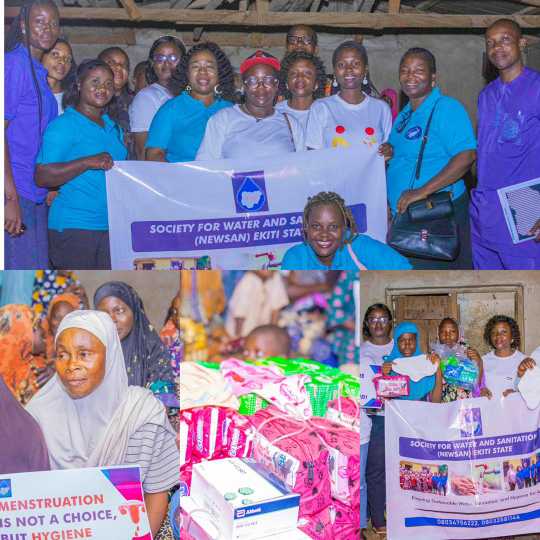
Residents of Ori Okuta (Ebira) Community in Iworoko, Ekiti State, have benefited from the health and sanitation outreach programme organised by the Network of Civil Society Organisations on Water and Sanitation (NEWSAN), Ekiti State Chapter in commemoration of World Menstrual Hygiene Day 2026.
The outreach, held on Friday, focused on promoting menstrual hygiene management, environmental sanitation, disease prevention, and healthy living among women and other members of the community.
Leading the sensitisation on menstrual hygiene management, Pharm.Faith Oluwashola, educated women and girls on the importance of proper menstrual care.
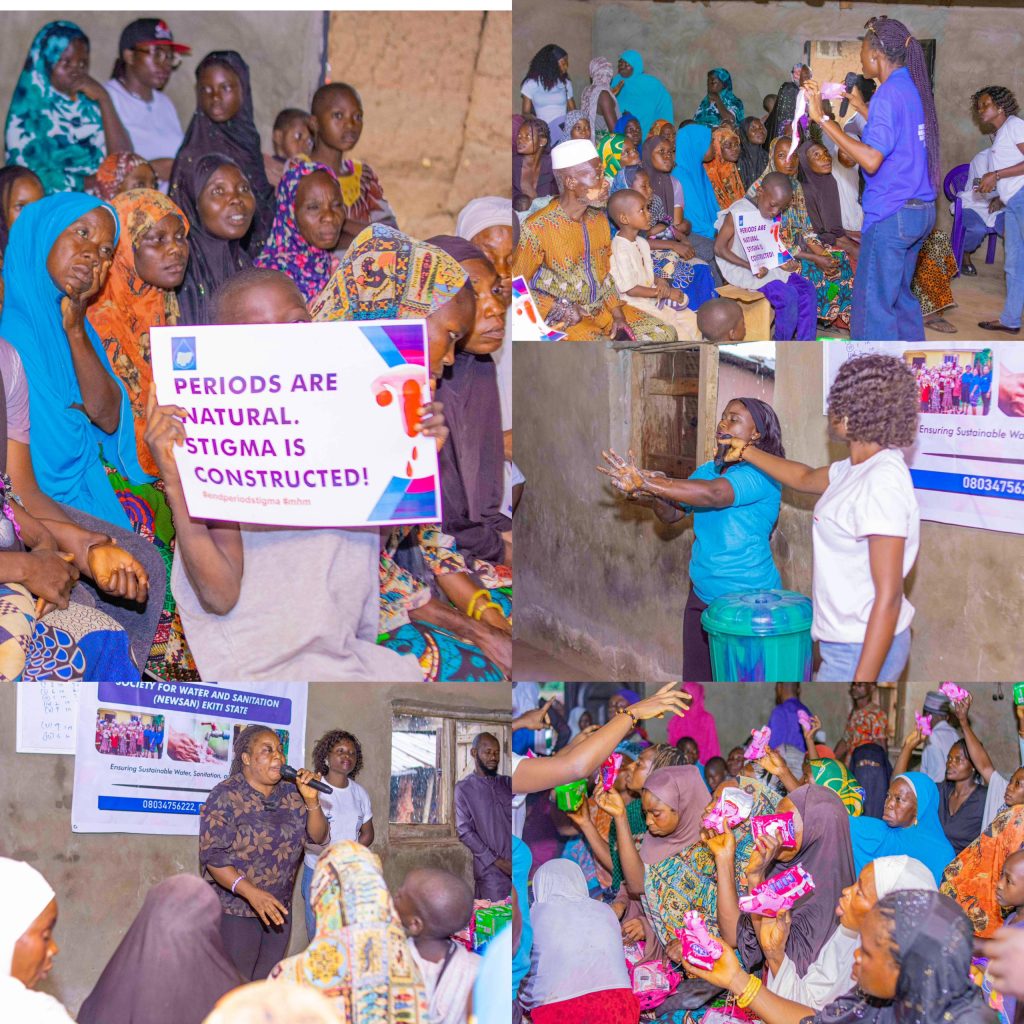
She warned against the use of unhygienic materials such as rags, tissue papers, and other inappropriate items during menstruation, stressing that such practices could expose women to infections and other health complications.
Also in her presentation, Moyinoluwa Ogundowole stressed the fundamental importance of maintaining proper hygiene during the menstrual cycle.
Another member of the organisation, Mrs. Bukola Adedeji, enlightened residents on the dangers of open defecation and its impact on public health.
She urged community members to pay close attention to symptoms of illnesses and seek prompt medical attention at healthcare facilities rather than resorting to self-medication.
Mrs. Adedeji also educated participants on communicable diseases, including HIV/AIDS and Tuberculosis, highlighting the need for early detection, prevention, and proper treatment.
As part of the outreach, NEWSAN distributed free menstrual pads to women and girls, as well as condoms to adults in the community to support healthy living and disease prevention efforts.
Speaking with Roundoff News, the Secretary of NEWSAN, Ekiti State Chapter, Barr. Rita Ilevbare, explained that the organisation was motivated by the need to improve hygiene and sanitation practices within underserved communities.
According to her, many women in the community were unaware of the health benefits of using proper menstrual products and still relied on traditional alternatives that could pose health risks.
Barr. Ilevbare expressed concern over the absence of toilet facilities in the community, noting that residents confirmed that there was no single public toilet available.
She warned that improper waste disposal and open defecation could lead to outbreaks of diseases such as cholera, which could easily spread beyond the community.
She noted that NEWSAN would document the challenges identified during the outreach and engage relevant government agencies, including the Ministry of Environment and other stakeholders, to seek lasting solutions.
Community leaders, including the Community Secretary, Mr. Adams Suleiman, and the Women Leader, Mrs. Oyiza Jamiu, commended NEWSAN for its intervention.
They described the outreach as timely and impactful, expressing appreciation for the health education and donated materials provided to residents.
The leaders also pledged to share the knowledge gained with other members of the community who were unable to attend the programme.
