

The Federal Polytechnic, Ado-Ekiti, has trained and certified 915 students and artisans in Ekiti State, equipping them with practical skills designed to improve their employability, entrepreneurship and contribution to the state’s economy.
The beneficiaries received National Skills Qualification (NSQ) certificates at the institution’s maiden certificate award ceremony organised by the Polytechnic’s Skill Development Centre in collaboration with the National Business and Technical Examinations Board (NABTEB).
The ceremony, held on Wednesday at the Atiku Abubakar Hall, Ado-Ekiti, had as its theme, “Skills, the Bedrock of Development,” and brought together representatives of government agencies, Polytechnic management, staff, students, facilitators and other stakeholders.

Speaking at the event, the NBTE Southwest Zonal Director, Dr John Onyebuchi, said the programme was designed to expand access to technical and vocational education beyond conventional National Diploma and Higher National Diploma programmes.
Onyebuchi urged the beneficiaries to continue developing their skills, stressing that practical competence was becoming increasingly important in a changing economy.
He also called on other polytechnics to make their facilities available to members of their host communities, including people without conventional academic qualifications, to enable more Nigerians acquire marketable skills.
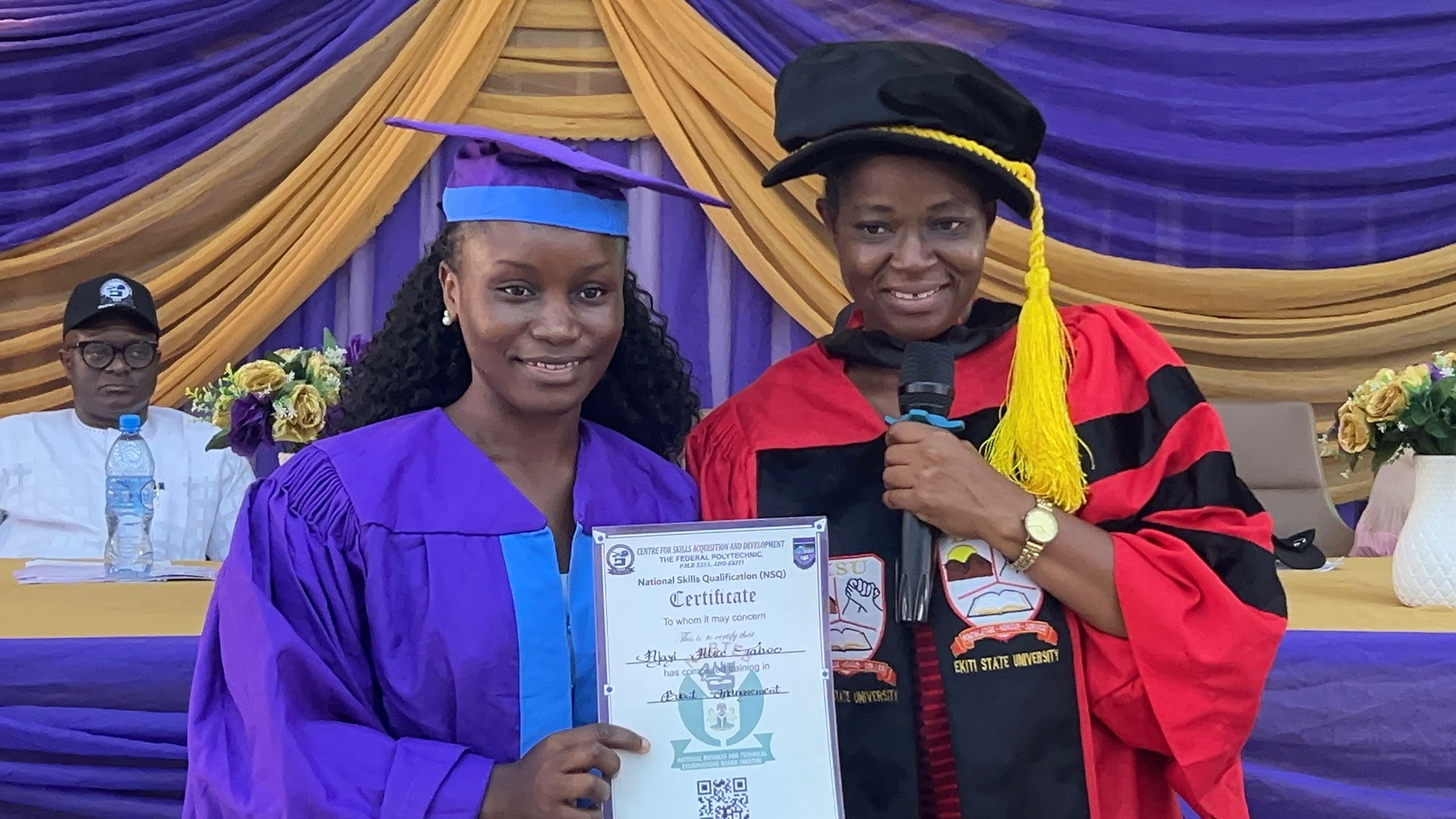
The Rector of the Polytechnic, Dr Temitope Alake, said the ceremony represented more than the presentation of certificates, describing it as a celebration of the beneficiaries’ patience, perseverance, vision and discipline.
Alake disclosed that the institution was one of four institutions selected in the Southwest to run the NSQ programme and had received support to develop facilities required for the training.
He urged the beneficiaries to take their newly acquired skills beyond the classroom and turn them into productive ventures, noting that Nigeria required technically competent people capable of creating value and reducing dependence on conventional white-collar employment.
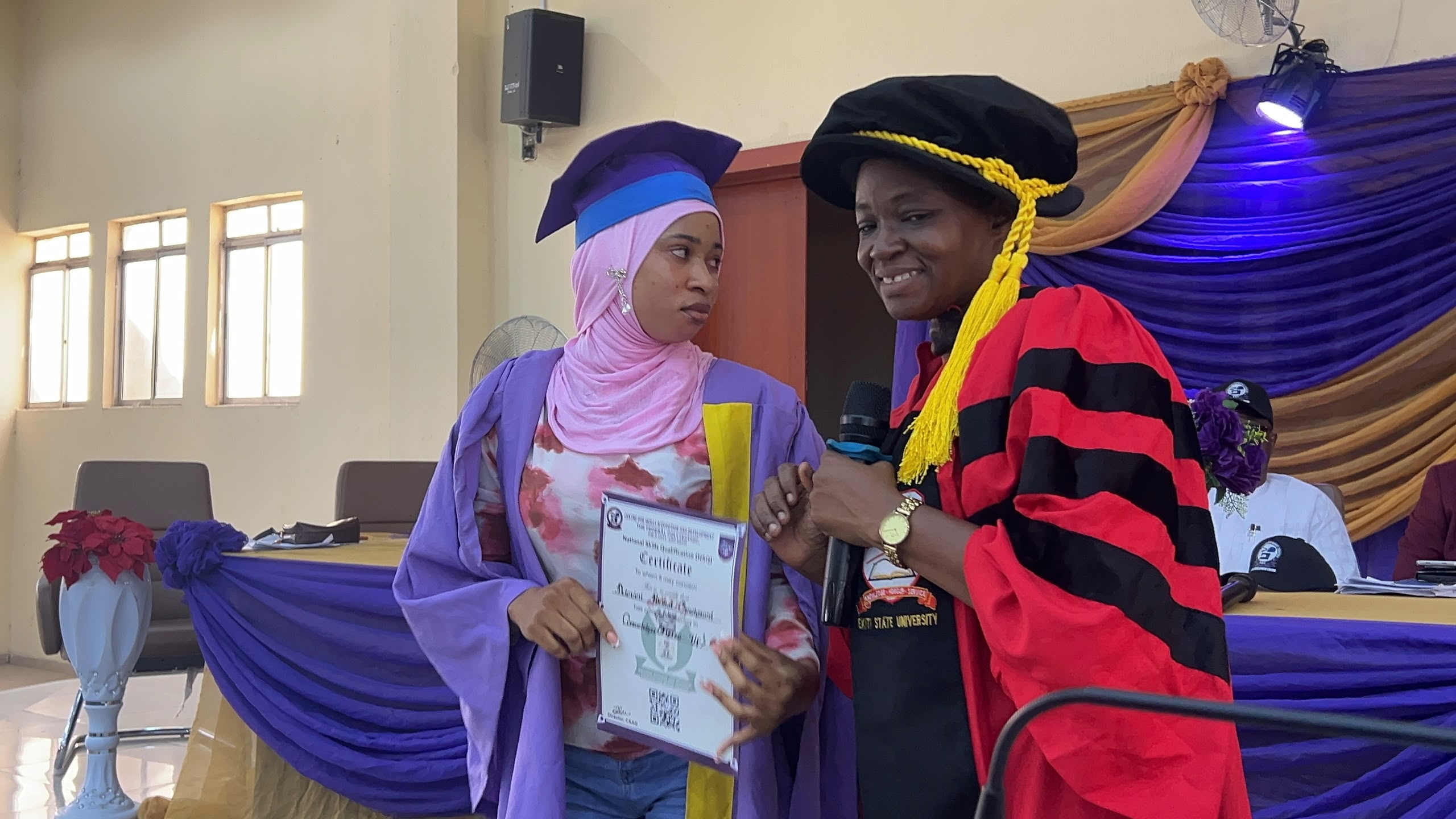
The Director of the Skill Development Centre, Dr Olawamide Fajilade, also charged the beneficiaries not to keep their certificates at home or wait for conventional employment before putting their skills to use.
She described the certificates as instruments for further development and urged the beneficiaries to continue learning, practise their trades and explore opportunities to create jobs and businesses.
The keynote speaker, Dr Olapade Olalusi, similarly encouraged the graduates to look beyond their academic qualifications and maximise the expanded capabilities acquired through the programme.
One of the beneficiaries, Jegede Solomon Tosi, who trained in electrical installation, said the programme provided him with practical experience and enhanced his capacity to become more productive.
Another participant, Salako, who trained in poultry production, said the programme exposed her to bird feeding, medication, incubation and general poultry management.
She said the practical experience had strengthened her interest in poultry farming and provided her with knowledge she could apply in developing a sustainable enterprise.
