
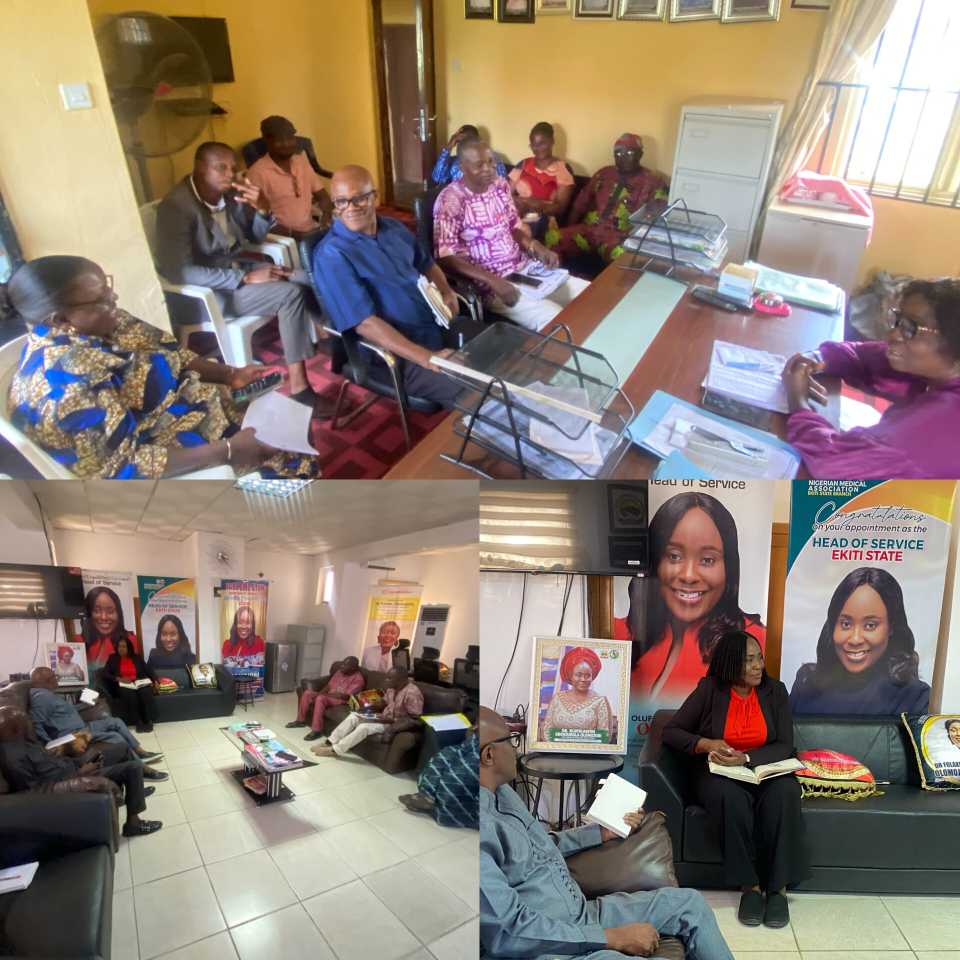
The State Advocacy Team on the Global Fund GC7 Community-Led Monitoring (CLM) Integrated Project has called on the Ekiti State Government to increase budgetary allocation for tuberculosis (TB) and HIV programmes amid declining donor funding, while securing pledges of collaboration from the state, Head of Service, Dr. Folake Olomojobi and the Director General of the National Orientation Agency (NOA), Mrs. Oluwakemi Akomolede to promote community participation in primary healthcare delivery.
The team lead and the State Coordinator of the Tuberculosis Network, Dr. Taiwo Benson, made the call during separate engagements with the Coordinator of NOA in Ekiti State and the Head of Service.
Benson said dwindling international support for HIV, tuberculosis and malaria interventions had made it imperative for governments at the state and federal levels to take greater responsibility for funding programmes aimed at tackling the diseases.
He attributed the decline in donor funding partly to changing United States foreign aid policies and the diversion of resources by some European countries to support the war in Ukraine.
He urged the state government to prioritise domestic funding for disease-control programmes, warning that overdependence on external support could undermine interventions designed to improve public health.
Benson cited a case involving a woman living with HIV who gave birth to a baby who also tested positive for the virus, saying efforts to secure government assistance for the affected family were hampered by funding constraints.
He said the situation highlighted the need for government agencies to have adequate budgetary provisions to respond to the health challenges of vulnerable residents.
The team lead also called on NOA to use its existing community structures to educate residents on HIV prevention, tuberculosis treatment, malaria control and the need for community ownership of primary healthcare facilities.
Benson explained that the Community-Led Monitoring project was designed to mobilise existing community structures to identify gaps in primary healthcare facilities and encourage residents to contribute resources towards addressing them.
He said the first phase of the project, implemented between 2022 and 2025, covered 15 wards across five local government areas in Ekiti State, while the second phase, known as the Integrated Community-Led Monitoring project, began in January 2026 and was expected to end in December.
He explained that the initiative brings together community representatives and non-governmental organisations to assess healthcare needs, identify infrastructural and personnel gaps, and mobilise local resources to improve services.
Benson cited the renovation of a primary healthcare facility in Igbara-Odo as an example of successful community participation, saying a woman whose daughter was born at the facility contacted her daughter abroad, who subsequently spent about N23 million on its renovation.
According to him, the intervention included the construction of 14 toilets and the installation of a 10kVA solar power system.
He said the project had demonstrated that communities could complement government efforts by contributing resources towards improving healthcare facilities.
Benson further stressed that tuberculosis treatment was free and only last six months for drug-susceptible cases, urging patients to complete their prescribed treatment to prevent the development of drug-resistant tuberculosis.
He appealed to the state government to increase funding for HIV, tuberculosis and malaria programmes and urged community leaders, religious institutions and philanthropists to support primary healthcare facilities as international donor assistance declines.
Responding, the NOA Coordinator in Ekiti State pledged the agency’s support for the initiative, saying its officers across the state’s 16 local government areas would be available to assist with community sensitisation.
She said the agency was responsible for educating the public on government policies and programmes and would be willing to work with the team to mobilise traditional rulers, religious leaders and other community stakeholders to support primary healthcare delivery.
The State Coordinator commended the team for its efforts to improve healthcare outcomes but identified inadequate funding as a major challenge to the agency’s operations.
She urged the team to involve NOA officers in its activities, particularly in the local government areas covered by the project’s second phase, to strengthen public engagement and improve community participation.
At a separate meeting, the Head of Service, Dr. Olomojobi, emphasised the need for sustainability, proper documentation and regular evaluation of health interventions before stakeholders focus on securing additional funding.
She urged the team to assess its previous activities, document its achievements and maintain reliable data on interventions carried out in communities.
“Before we talk about funding, let’s look at sustainability. How did we manage the funding we got before it ended, and did we document how we managed it? Do we have the data of the things happening in the localities where we have touched, and are they valid data?” he asked.
Olomojobi said the team should acknowledge and document the positive outcomes of its interventions, noting that field workers were better positioned to provide information on community-level developments than institutions responsible for providing funding.
She also called on the team to support the state government’s efforts in the health sector and educate residents on the need to regard healthcare as a collective responsibility.
According to her, reliable real-time data would help the government assess the impact of interventions and make informed decisions on healthcare delivery.
