
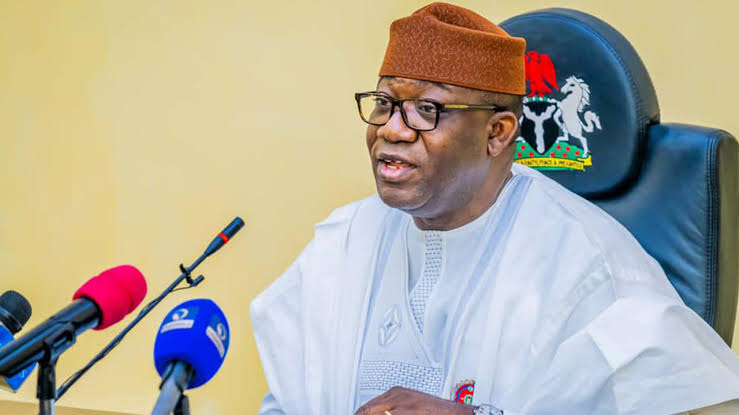
As Ekiti State marks 30 years of its creation, it is important to remember that some of the foundations upon which today’s Ekiti continues to build were laid during the eight years of Dr. Kayode Fayemi’s administration.
Beyond the reforms that have become widely known, the Fayemi years produced enduring investments and institutional interventions across education, healthcare, infrastructure, agriculture, governance, youth development, energy and human capital.
One of the notable achievements was the Independent Power Project (IPP), conceived to provide more reliable electricity to public institutions in Ado-Ekiti and reduce dependence on the national grid. It was a bold intervention in addressing the persistent energy challenges confronting government facilities.
Education remained one of the defining priorities of the administration.
The government sustained bursary and scholarship programmes for Ekiti students at home and abroad, while the Operation Renovate All Schools in Ekiti (ORASE) programme embarked on the rehabilitation and improvement of schools across the state.
The administration also established the Bamidele Olumilua University of Education, Science and Technology, Ikere-Ekiti, and the Ekiti State Polytechnic, Isan-Ekiti. Six model colleges were also constructed and named after distinguished Ekiti personalities: Deji Fasuan, Banji Akintoye, Ayo Fasanmi, David Oke, Harding Memorial and Funminiyi Afuye Memorial.
The administration further procured more than eight Marcopolo buses to provide free transportation for Ekiti students and civil servants, an intervention whose buses have continued to serve the people beyond the Fayemi years.
Infrastructure, Sports and Public Facilities
The 12,000-capacity Ekiti Parapo Pavilion was another major landmark project, providing the state with a large-scale facility for conferences, exhibitions, ceremonies and other major events.
In sports and youth development, the administration established Ekiti United Football Club, creating another pathway for young Ekiti talents to pursue careers in professional football.
Perhaps one of the less celebrated aspects of the Fayemi years was the breadth of its community-level interventions. The administration’s community-driven development initiatives reached all 132 communities in the state, with projects including palaces, civic centres and health facilities. Vehicles were also provided for traditional rulers across the state.
The administration also pioneered the policy of constructing five kilometres of roads in each local government area, creating a foundation for subsequent rural road interventions.
That foundation later complemented the World Bank-supported Rural Access and Agricultural Marketing Project (RAAMP) and other interventions aimed at expanding rural connectivity and opening up agricultural communities.
Fayemi also initiated two transformational transportation projects that have since become major landmarks in Ekiti: the Ekiti Agro-Allied Cargo Airport and the Ado-Ekiti Central Ultra-Modern Bus Terminal. The cargo airport was formally handed over to the contractor in 2021, with construction of its 3.2 kilometre runway and some vital aspect completed under his administration. The Ado-Ekiti Bus Terminal was also initiated in 2021 as part of the Central Business District and urban renewal project. Although both projects were completed under Gov Biodun Oyebanji administration, their conception and commencement were products of the Fayemi years.
Another important part of the Fayemi legacy was the state’s ability to attract and coordinate international development assistance.
Programmes and interventions associated with the period included SEPIP, AGILE and IDEA in education; HSDP and malaria interventions in health; the Ekiti Knowledge Zone and Agro-Processing initiatives supported by the African Development Bank; NEWMAP in environmental management; SFTAS in public finance and governance; Third Urban and SURWASH in water and sanitation; NG-CARES for post-COVID recovery through EKSCDA; and SABER in trade and commerce.
Taken together, these programmes represented billions of dollars in development financing, grants and concessional or low-interest loans mobilised around Ekiti’s development agenda over the years, with significant foundations laid during the Fayemi administration.
The ultimate measure of any administration is not merely the number of projects it commissioned, but the institutional and human impact those interventions leave behind. During the period, Ekiti recorded significant improvements in education, healthcare, infrastructure, public-sector reform and social development. The state was also recognised for having one of the country’s lowest out-of-school rates, while maternal and child health outcomes improved substantially.
By the time Fayemi left office in October 2022, Ekiti had also emerged among the states recording comparatively lower levels of multidimensional poverty.
Thirty years after the creation of Ekiti State, some political memories may fade, but institutions, infrastructure and development foundations remain.
Published : isapo consultancy information communications
