
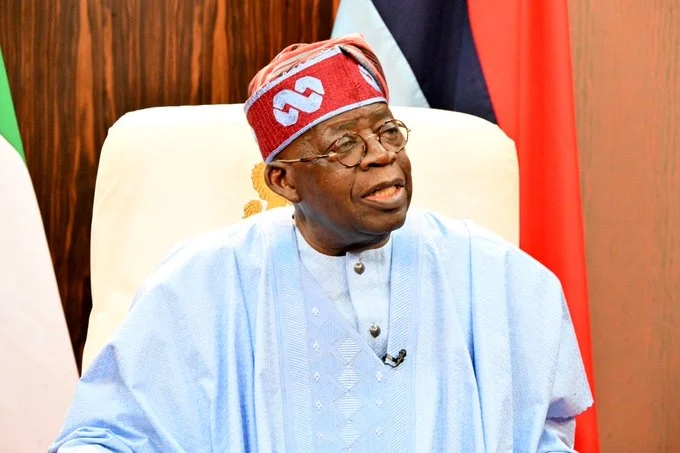
President Bola Tinubu has said the economic reforms his administration introduced have set Nigeria on course to achieve a $1 trillion economy by 2030, even as citizens continue to grapple with hardship and economic difficulties.
The President made the statement on Tuesday at the second edition of the Asiwaju Scorecard Series and Policy Roundtable in Abuja, where he was represented by the National Chairman of the All Progressives Congress, Prof. Nentawe Yilwatda.
Tinubu said the reforms had strengthened the foundation for economic stability, growth and long-term prosperity, while acknowledging that Nigerians were still experiencing significant economic strain.
The President began implementing major economic reforms on May 29, 2023, shortly after taking office, including the removal of the petrol subsidy and changes to the foreign exchange market. The measures drew mixed reactions given their effect on household incomes and the cost of living, and more than three years on, the Presidency has continued to defend them as necessary steps toward repositioning the economy for sustainable growth.
According to Tinubu, the removal of the fuel subsidy, foreign exchange reforms, improved revenue mobilisation and investment in critical infrastructure were required to move Nigeria away from years of economic instability. He described the state of the economy his administration inherited on assuming office as difficult, citing fuel subsidy distortions, multiple exchange-rate windows, weak revenue mobilisation, foreign-exchange shortages, mounting debt-service pressures and years of underinvestment in infrastructure. He said it became clear that the country could not continue on that path, prompting the difficult decisions to remove the fuel subsidy and reform the foreign-exchange market.
The President said recent economic indicators pointed to a strengthening foundation. He disclosed that Nigeria’s gross external reserves had risen to about $52.7 billion by August 2026, while consolidated non-oil revenue grew from roughly ₦13.63 trillion in 2023 to ₦16.4 trillion in the first two quarters of 2026 alone.
He also said the country’s merchandise trade surplus had expanded from about ₦44.8 billion for the whole of 2023 to approximately ₦7.54 trillion in the first quarter of 2026. In addition, he cited real GDP growth of 4.43 per cent in the second quarter of 2026 and a decline in inflation to about 15.4 per cent, down from its previous peak.
He said these figures did not mean the country’s economic challenges had disappeared, but they showed a change in direction.
The President maintained that macroeconomic stability should not be treated as an end in itself, but as a foundation for improving the wellbeing of Nigerians. He said the real measure of success would be when that stability translates into cheaper food, more jobs, affordable credit, reliable electricity and greater purchasing power for citizens.
On the administration’s $1 trillion economic target, Tinubu said the ambition went beyond hitting a numerical benchmark, describing it instead as a national mission to build a Nigeria that produces more, exports more, attracts greater investment, creates more jobs and gives young people a stronger stake in the country’s future.
