
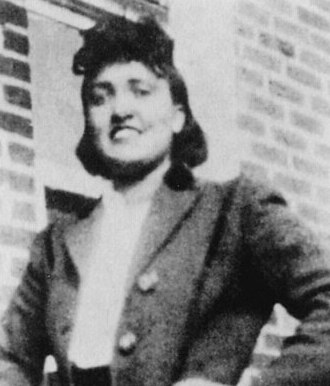
Henrietta Lacks never knew what was taken from her. A poor Black tobacco farmer from Virginia, she died on October 4, 1951, at age 31. Her family had no idea that part of her was about to become one of the most important tools in modern science.
Lacks (born August 18, 1920) went to Johns Hopkins Hospital in Baltimore on February 1, 1951, in pain from a “knot” in her cervix and bleeding. A biopsy showed cervical cancer. Her gynecologist, Dr. Howard Jones, later said the tumor looked unlike anything he had seen.
Before her treatment began, doctors removed cells from the tumor for research. They did not ask her permission or tell her, which was standard practice at the time. Eight days later, Dr. George Otto Gey took another sample. Those cells became the HeLa line, named for the first two letters of her first and last names.
Lacks got no better. In August she went back to the hospital and demanded to be admitted. She stayed there, in pain, until she died. A partial autopsy showed the cancer had spread throughout her body.
Cells that would not die
While Lacks was dying, Gey found that her cells did what no human cells had done before. They kept living and growing in the lab. Earlier samples from other people lasted only days. Gey isolated a single cell and multiplied it, creating the first “immortal” human cell line.
Researchers could now run experiments again and again on the same cells. HeLa cells helped develop the polio vaccine and uncover secrets about cancer, viruses and radiation. They contributed to advances in in vitro fertilization, cloning and gene mapping. They have been used to test human reactions to products such as tape, glue and cosmetics. Nearly 11,000 patents involve them. It is estimated that all the HeLa cells ever grown would weigh more than 50 million metric tons.
As demand surged, a special unit was set up at the Tuskegee Institute in Alabama. African-American scientists and technicians there, many of them women, grew the cells and helped test Jonas Salk’s polio vaccine. Author Rebecca Skloot has noted the painful irony: Black researchers used cells from a Black woman to help save millions of Americans, most of them white. They did it on the same campus, and at the same time, that state officials were running the Tuskegee syphilis study.
That study began in 1932 and enrolled 600 Black men, 399 with syphilis and 201 without. Penicillin became the standard treatment in 1947, but the men were denied it. Planned for six months, the federally sponsored study lasted 40 years and ended in 1972 only after public outcry. President Clinton apologized on behalf of the nation in 1997, after a $10 million settlement.
A family left in the dark
While her cells spread to labs around the world, Lacks’s family was told almost nothing. Her husband, David Lacks, received little information after her death. Distrust rooted in the racism of the Jim Crow South, and deepened by gaps in class and education, kept the family from understanding what had happened.
They learned the truth more than 25 years later, through a 1976 Rolling Stone article by Michael Rogers. Relatives were stunned and confused. How could Henrietta’s cells have been taken without consent? How could they still be alive a quarter-century after her death? Scientists then began collecting samples from her husband and children, again without informed consent.
The family has never shared in the profits of the multimillion-dollar industry that sells human biological materials. Skloot’s 2010 book, The Immortal Life of Henrietta Lacks, traces the journey from the “colored” ward of Johns Hopkins to laboratories with freezers full of HeLa cells, and to Clover, Virginia, and east Baltimore, where Lacks’s children and grandchildren live.
Experiments without consent
Lacks’s cells were also used in a research scandal. In February 1954, Chester Southam, chief of virology at Sloan-Kettering Institute for Cancer Research, injected HeLa cells into cancer patients and healthy people without telling them. Three junior doctors refused to take part, calling the study a violation of basic patient rights and illegal, immoral and deplorable.
When the dispute reached the press, the New York State Board of Regents held hearings. The board reprimanded Southam and suspended his medical license for a year. The National Institutes of Health then found that research on patients without informed consent was widespread. Of the hundreds of unethical studies it reviewed, it named the 22 worst. Southam’s ranked 17th. The findings helped drive the push for oversight of research and for informed consent as a requirement.
