
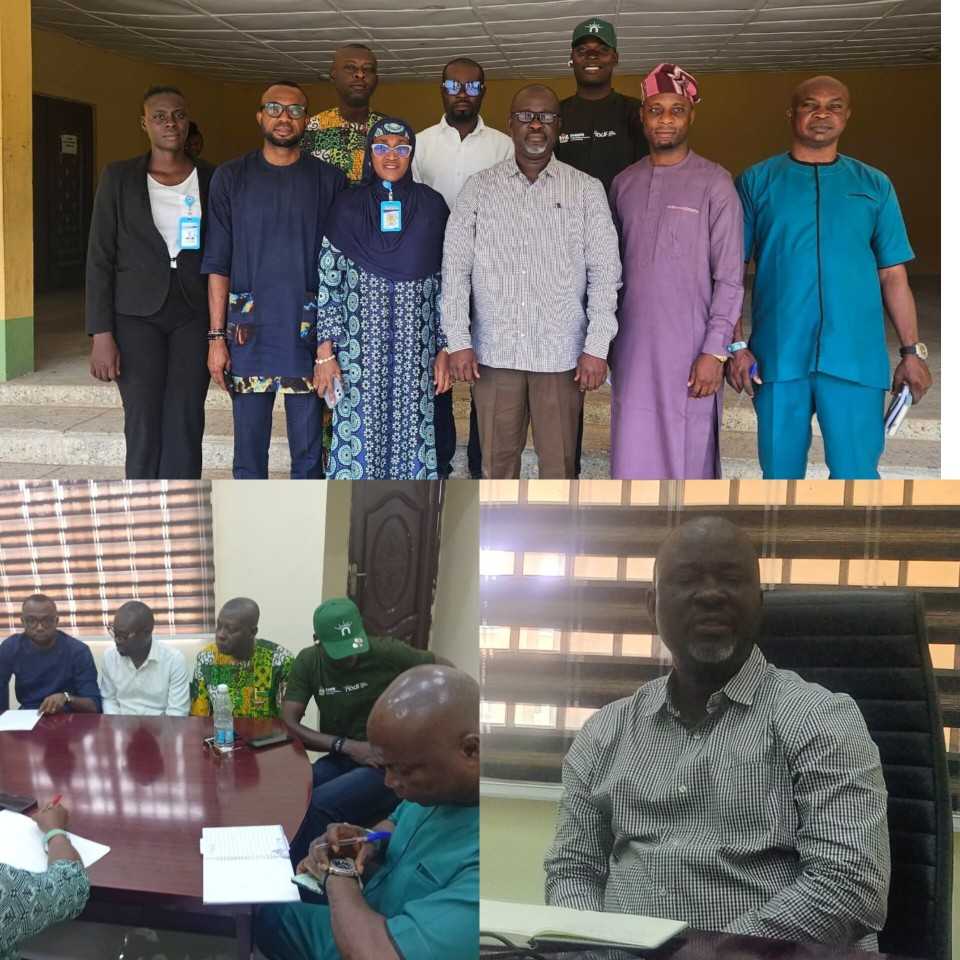
The Provost of the Federal College of Education, Ilawe-Ekiti, Dr. Smart Olugbeko, has called for improved remuneration and welfare packages for teachers to revive Nigeria’s education sector.
Dr. Olugbeko made the call on Thursday while receiving a five-man delegation of the Nigeria Union of Journalists, Ekiti State Council, during a courtesy visit to the college.
He said the declining interest in the teaching profession is largely due to poor pay and low societal value placed on teachers. According to him, meaningful reform must start with making teaching an attractive and rewarding career.
“Education remains the least subscribed course in Nigeria because the returns on investment are not encouraging. If government begins to pay teachers attractive salaries, more people will willingly study education and embrace teaching as a career,” the Provost said.
Dr. Olugbeko noted that many graduates avoid education-related courses because of poor salary structures, while teachers at the basic level struggle to make ends meet. He warned that the country risks a shortage of qualified teachers if the trend continues, as many currently in the profession are “reluctant teachers” who took the job for lack of alternatives.
“Teaching should be restored to its rightful place in society. It is a national challenge that requires urgent attention,” he added.
Earlier, the Secretary of the Council, Comrade O’Seun Ogunsakin, who led the delegation on behalf of the Chairman, Comrade Kayode Babatuyi, said the visit was part of the union’s move to build strategic partnerships with critical institutions for robust co-existence.
Ogunsakin commended the college management for its infrastructural development and vision of becoming a leading centre for teacher education in Nigeria.
He identified three key areas of collaboration: publicity, training, and policy advocacy. On publicity, he said the NUJ would help project the college’s success stories through its members across online, print, and electronic platforms.
He also proposed collaboration with the International Institute of Journalism, the NUJ’s training arm, to provide professional media training for college staff. He suggested establishing a Press Club in the school to nurture students interested in journalism alongside their education programmes.
“Today, the nation does not appear to place enough value on education. There is a need for us to work together to achieve your vision while advocating policies that will strengthen teacher education,” Ogunsakin said.
Dr. Olugbeko thanked the NUJ for the visit, stating that no organisation can survive without partnership with the media. He described collaboration between the college and the NUJ as important for advancing teacher education and national development.
