
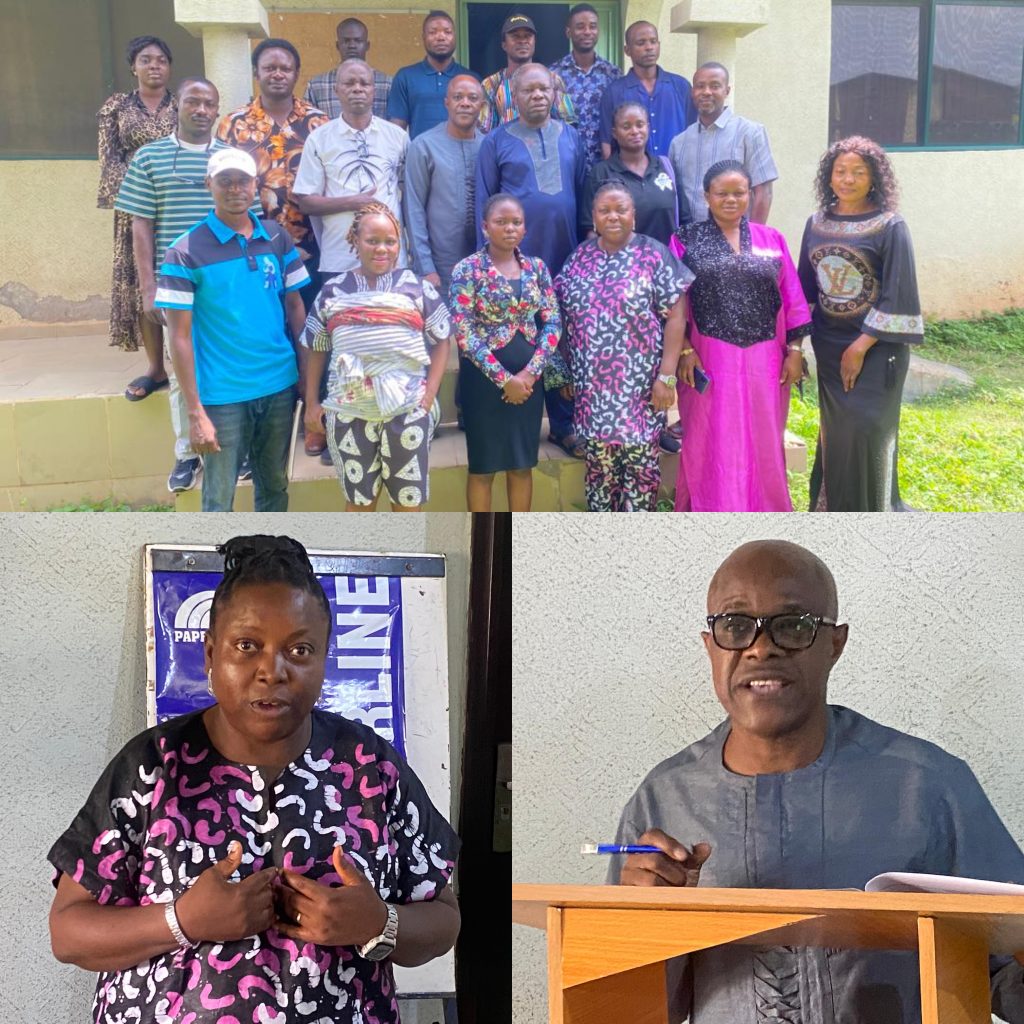
…confirms that GC7 CLM project records healthcare improvement in Ekiti
Ekiti State Co-ordinator of the Civil Society for the Eradication of Tuberculosis in Nigeria (TB Network) and Team Lead of the Global Fund GC7 Integrated Community-Led Monitoring Project in Ekiti State, Dr. Taiwo Benson has called on communities to take ownership of health centres around them and support their functionality.
Dr. Benson disclosed this during a bi-annual media briefing of the Global Fund GC7 Integrated Community-Led Monitoring (CLM) Project for HIV/AIDS, Tuberculosis (TB) and Malaria, involving stakeholders and community-based organizations (CBOs) in the health sector.
Speaking on the background of the initiative, Dr. Benson noted that Nigeria remains one of the countries with the highest burdens of tuberculosis, HIV/AIDS and malaria globally, stressing that poverty, inadequate healthcare access and socio-economic inequalities continue to fuel the prevalence of the diseases.
He explained that partnership tween the communities and government would enhance quality service delivery in PHCs and reduced the scourge of TB, HIV and Malaria.
The Integrated Community-Led Monitoring project, is a tripartite arrangement implemented through civil society networks including, the Network of People Living with HIV/AIDS in Nigeria (NEPWHAN), and the Association of Civil Society Organizations on Malaria, Immunization and Nutrition (ACOMIN), and Civil Society for the Eradication of Tuberculosis in Nigeria
The project aims to bridge gaps in healthcare delivery and strengthen community participation in health interventions.
According to him, the project empowers communities to identify challenges affecting healthcare services, including stigma, discrimination, poor infrastructure and inadequate resources, while promoting advocacy and community ownership of health programmes.
Highlighting some of the achievements recorded in Ekiti State between the fourth quarter of 2025 and May 2026, Dr. Benson said communities have demonstrated commendable commitment towards improving healthcare facilities.
He revealed that at PHC Housing Estate, Ado-Ekiti, community members contributed resources to relocate the labour room to a more spacious and suitable location and also constructed a waste channel for the facility’s laboratory.
Similarly, at PHC Ilogbo-Ekiti, a philanthropist engaged two security personnel and a gardener to support the facility’s operations, while residents of Isaba-Ekiti collectively hired a security guard to enhance safety at their Primary Healthcare Centre.
Dr. Benson described these interventions as evidence of the positive impact of community participation in strengthening the healthcare system.
He, however, called on governments at all levels, development partners, private sector stakeholders and citizens to intensify efforts towards addressing barriers affecting access to healthcare services, particularly for vulnerable populations.
According to him, extending health insurance coverage beyond the formal sector, ensuring prudent management of healthcare funds, prioritizing health education and committing adequate resources to healthcare interventions are critical steps towards reducing the burden of HIV, TB and malaria in Nigeria.
He also urged communities to take ownership of their Primary Healthcare Centres through volunteering, resource mobilization and advocacy for improved funding and infrastructure.
Addressing questions from journalists on efforts being made to reach rural populations, Dr. Benson disclosed that the project’s 15 Community-Based Organizations have been conducting monthly sensitization campaigns across communities since the programme commenced in 2022.
He explained that community members are regularly educated on prevention, testing and treatment of HIV, tuberculosis and malaria, adding that individuals diagnosed with any of the diseases are promptly referred to appropriate health facilities for treatment.
“Sensitization remains a core component of the project. We continuously engage communities and ensure that those affected by these diseases are linked to treatment centres without delay,” he said.
The TB Network Coordinator also used the opportunity to raise concerns over the growing challenge of gender-based violence (GBV) in Nigeria, noting that women, men, boys and girls continue to suffer various forms of abuse, discrimination and deprivation.
He called on all stakeholders and citizens to join hands in combating gender-based violence and encouraged Nigerians to report cases whenever they occur.
“If you see something, say something. We must not remain silent in the face of gender-based violence,” he stated.
Also speaking at the event, the Ekiti State Chairman of ACOMIN, Mr. Olu Ogunrotimi, commended development partners and Community-Based Organizations for their dedication to improving healthcare outcomes.
He assured that stakeholders would continue to work tirelessly to ensure that residents, particularly those in rural communities, benefit from quality healthcare services and interventions.
The media engagement concluded with a renewed call for stronger partnerships among government agencies, development partners, civil society organizations, community leaders and citizens to strengthen health systems and scale up people-centred healthcare services across the state.
