
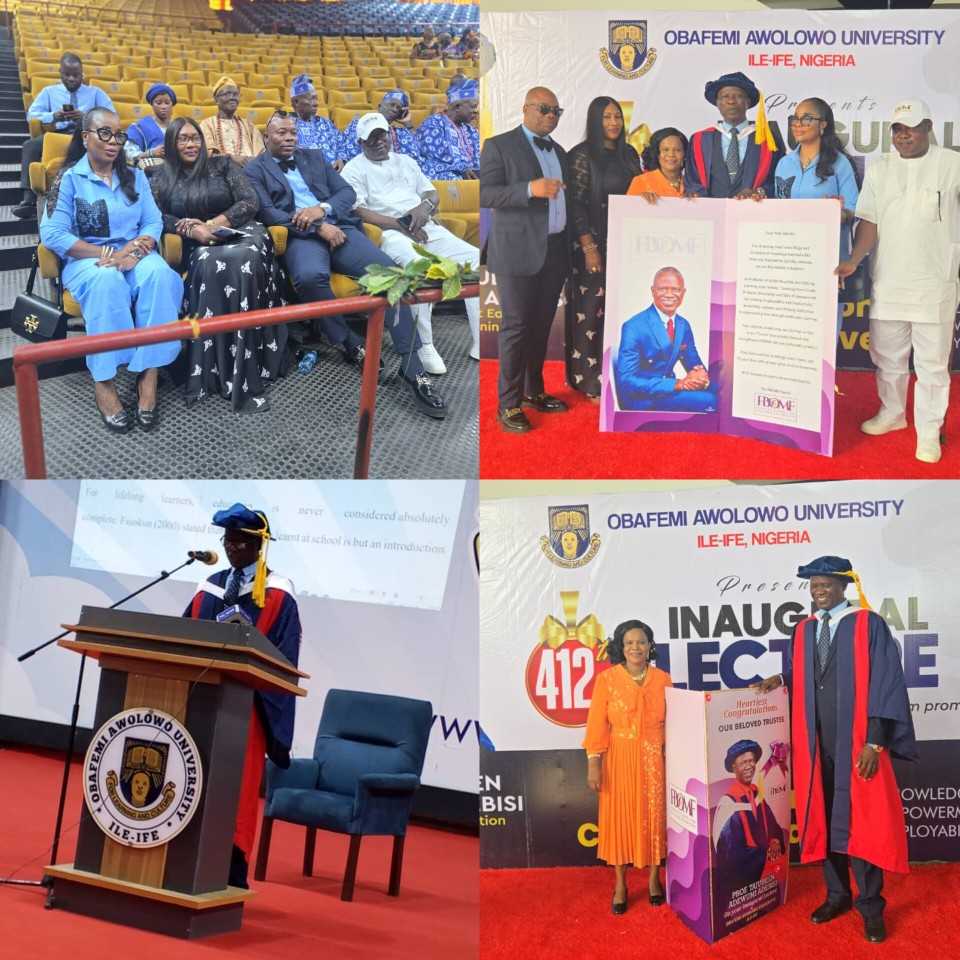
A Professor of Adult Education and Lifelong Learning at the Obafemi Awolowo University (OAU), Ile-Ife, Prof. Tajudeen Adewumi Adebisi, has called for improved funding and stronger policy commitment to adult and lifelong education, warning that continued neglect of the sector is deepening poverty, unemployment and democratic fragility in Nigeria.
Prof. Adebisi made the call while delivering a public lecture titled “Learning from Cradle to Grave: Knowledge and Skills Empowerment for Lifelong Employability and Productivity” at the Oduduwa Hall of the university.
According to him, sustained investment in adult and lifelong learning is critical to breaking the cycle of mass poverty which, he said, poses a grave threat to the survival and integrity of democratic governance.
“Poverty is not merely an economic condition; it is a threat to the very soul of democracy,” the professor said. “When able-bodied citizens cannot meet their basic needs, democracy becomes vulnerable to corruption, insecurity, banditry, kidnapping and deep-seated inequality.”
The Osun State-born academic noted that adult and lifelong education remains one of the most underfunded components of Nigeria’s education system despite its capacity to equip citizens with employable skills, foster productivity and strengthen civic participation.
Drawing from decades of research in vocational education, indigenous skills development and human resource empowerment, Prof. Adebisi linked Nigeria’s socio-economic challenges to rapid global changes that have rendered many traditional job pathways obsolete without corresponding retraining opportunities.
He lamented the decline of indigenous vocational trades in South-Western Nigeria, including blacksmithing, weaving and carpentry, attributing their collapse partly to poor funding, weak institutional support and societal preference for white-collar jobs.
According to him, with adequate funding and policy backing, these indigenous skills could be revitalised through modern tools, digital marketing and formal integration into education curricula.
“These trades once built families and communities. With proper investment, innovation and modern technology, they can again power an industrialised indigenous society,” he said.
Prof. Adebisi also drew attention to the transformation of the modern workplace, citing the shift from newspaper job advertisements to online recruitment platforms and from physical markets to virtual, round-the-clock businesses.
He stressed that without continuous learning and reskilling opportunities, many workers risk exclusion from the digital economy due to outdated competencies.
The professor identified communication, teamwork, critical thinking, leadership, adaptability, time management and digital literacy as core skills that adult education programmes must prioritise.
He referenced the 2003 framework by the North Central Regional Educational Laboratory and the Metiri Group, which groups 21st-century skills into digital-age literacies, inventive thinking, effective communication and high productivity.
Expressing concern over existing vocational initiatives such as the National Directorate of Employment and the National Open Apprenticeship Scheme, Prof. Adebisi described them as poorly funded, inadequately equipped and limited in reach.
He called on governments at all levels to significantly increase budgetary allocation to adult and lifelong education as a sustainable alternative to the shrinking availability of civil service employment.
Special emphasis was placed on women’s empowerment, with the professor noting that increased funding for adult literacy, ICT training and self-directed learning programmes for women would have far-reaching social and economic benefits.
“When women are empowered, families, communities and the nation are lifted,” he said.
In his concluding remarks, Prof. Adebisi maintained that sustainable democracy goes beyond periodic elections, insisting that empowered citizens must possess relevant knowledge and skills to participate meaningfully, innovate productively and hold institutions accountable.
The lecture was attended by dignitaries including the Ogunsua of Modakeke, Oba Tinuade; the Osun State All Progressives Congress (APC) governorship candidate, Alhaji Bola Oyebamiji; academics, community leaders and other stakeholders.
As part of the event, the Funmilayo Bamidele Oke Memorial Foundation (FBOMF) presented a gift card to Professor Adebisi who is also a member of the Board of the Foundation.
Presenting the card, the Chairperson of FBOMF, Hon. Taiwo Oluga, lauded Prof. Adebisi for his outstanding contributions to education, vocational development and human capacity building, describing his appointment to the board as well deserved.
She said the foundation looked forward to benefiting from his wealth of experience in advancing its mission of education, empowerment and community development.
Speaking with journalists after the lecture, Alhaji Oyebamiji commended the depth of the research and said his administration would give priority attention to adult and lifelong education as a tool for economic growth and democratic stability.
