
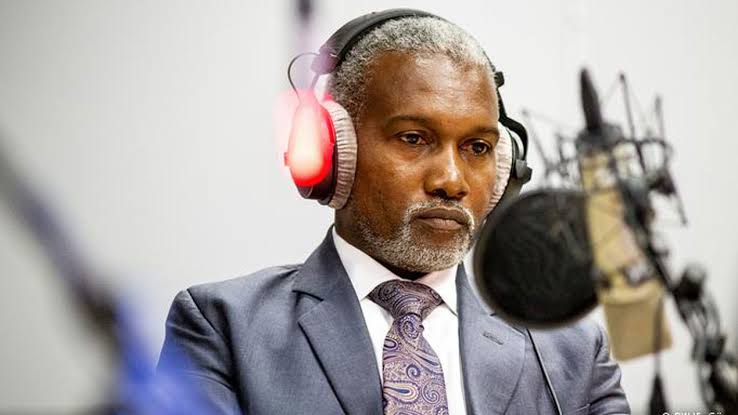
Nigeria’s Minister of Foreign Affairs, Ambassador Yusuf Tuggar, has raised concerns over the United States’ growing pressure on African nations, including Nigeria, to accept deportees from Venezuela, many of whom, he noted, are being released directly from American prisons. During an interview on Channels Television’s Politics Today, Tuggar firmly rejected the idea, stating, “It will be difficult for a country like Nigeria to accept Venezuelan prisoners into Nigeria. We have enough problems of our own.” He stressed the impracticality of such a move, adding, “We already have 230 million people. You will be the same people to criticize us if we agree to take in Venezuelans from US prisons.”
Speaking on the recent imposition of a 10% tariff on Nigerian goods by the US, Tuggar suggested that the decision might not be connected to President Bola Tinubu’s participation in the BRICS summit in Brazil, despite speculations to the contrary. He cautioned against drawing conclusions too quickly, saying, “The issue of tariffs may not necessarily have to do with us participating in BRICS.” His comments followed US President Donald Trump’s meeting with five West African leaders excluding Tinubu and the announcement of the new tariff.
Tuggar further warned that accepting deportees from Venezuela might only be the start of a troubling trend, emphasizing that it would be unjust for the US to demand such a commitment from Nigeria. “Honestly, I don’t think this is something Nigeria is in a position to work with,” he said. “And I think it would be unfair to insist that Nigeria accepts 300 Venezuelan deportees. Maybe that might just even be the beginning.” His comments reflect Nigeria’s resistance to policies that could strain its already stretched internal systems.
On the recent changes to the US visa policy, which now restricts Nigerian applicants to single-entry three-month visas, Tuggar dismissed claims that the new measure is based on mutual treatment. He argued that Nigeria maintains a more accommodating approach, offering Americans multiple-entry five-year visas. He clarified that while some US visitors, such as first-time tourists, may receive 90-day visas, Nigeria also provides long-term visas and has improved its system through online electronic applications. “It is not based on reciprocity,” Tuggar asserted, highlighting Nigeria’s intention to simplify the process, not impose limits.
